Untold History: A Comprehensive Evaluation of the Vintage Typewriter Font
In the landscape of digital typography, few styles evoke the tactile sensation of a mechanical key striking paper quite like fonts inspired by classic typewriters. Untold History is a typeface that bridges the gap between historical authenticity and contemporary design requirements. Designed to illuminate past memories through a modern lens, this font family offers designers a versatile tool for creating editorial layouts, vintage posters, book covers, branding materials, and quote graphics. By examining its technical specifications, stylistic variations, and practical applications, users can determine if this specific typeface aligns with their project goals.
Understanding the Design Philosophy
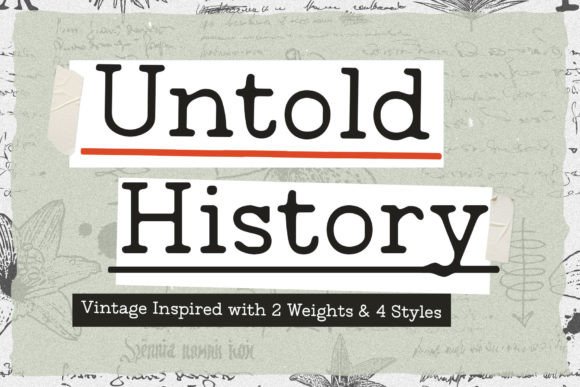
Untold History draws direct inspiration from the mechanics of classic typing machines. The core aesthetic captures the raw, imperfect nature of mid-20th-century document creation while maintaining the legibility required for modern screens. Unlike many retro fonts that rely on heavy distressing or obvious artifacts to simulate age, Untold History employs a cleaner approach. It provides the "taste of the past" without sacrificing the clarity needed for professional communication.
The font is engineered to be versatile enough for modern designs, meaning it does not strictly adhere to the limitations of physical typewriters. This balance allows it to function effectively in both high-resolution print media and web interfaces. The design philosophy centers on accessibility; the glyphs are constructed to ensure that the nostalgic feel does not compromise readability. For researchers and evaluators, this distinction is crucial, as many vintage-style fonts fail when scaled down or viewed on mobile devices.
Exploring the Four Distinct Styles
A significant advantage of the Untold History family is the availability of four distinct styles, each offering a unique touch to the visual hierarchy of a design. These variations allow for a wide range of creative expression without needing to switch to entirely different typefaces.
- Regular: This style serves as the foundation for the family. It offers a clean, standard typewriter appearance suitable for body text and long-form content where readability is paramount.
- Bold: The bold variant increases the weight of the strokes, providing strong emphasis for headlines and subheadings. It retains the character of the original machine but with added presence.
- Underlined: While underlining is less common in digital typography due to potential clashes with descenders, this style is built into the font file for specific design needs, such as emphasizing links or creating specific stylistic flourishes.
- Inky: Perhaps the most distinctive option, the inky style adds a subtle ink bleed effect to the letters. This feature mimics the way excess ink would soak into paper on an old manual typewriter, giving the text a more authentic vintage look. It is particularly effective for artistic projects where texture is a primary design element.
Technical Capabilities and Accessibility
One of the most critical technical features of Untold History is its PUA (Private Use Area) encoding. In the context of digital typography, PUA encoding allows designers to access a comprehensive set of glyphs, ligatures, and special characters that are not part of the standard Unicode block. This means that users can utilize alternate letterforms, swashes, and specific typographic ornaments with ease.
For professionals working on complex editorial designs or books, this capability reduces the need for external plugins or workarounds. The ability to access all amazing glyphs directly within the font file streamlines the workflow. When evaluating a font for a long-term project, the depth of the character set is often a deciding factor. Untold History scores highly in this regard, ensuring that the designer has the necessary tools to create nuanced and sophisticated layouts.
Situational Fit: Where Untold History Excels
Deciding to use a specific typeface requires matching the tool to the task. Untold History is a strong fit for several specific scenarios where the goal is to convey nostalgia, authority, or a human touch.
- Editorial Designs and Publications: Magazines, newspapers, and blogs that cover historical topics, true crime, or investigative journalism often benefit from the authoritative yet accessible feel of this font. The regular and bold styles provide excellent structure for articles and sidebars.
- Vintage Posters and Artwork: The inky style is particularly well-suited for promotional materials that aim to replicate the aesthetic of 1950s or 60s advertising. The subtle ink bleed adds a layer of texture that flat vector graphics often lack.
- Book Covers and Typography: For novels, memoirs, or non-fiction books dealing with history, the font helps set the tone immediately. It signals to the reader that the content is grounded in the past.
- Branding with a Heritage Focus: Businesses that want to emphasize tradition, craftsmanship, or longevity can use Untold History to create a logo or brand identity that feels established and trustworthy.
- Quotes and Social Media Graphics: Short, impactful quotes related to history or memory are visually enhanced by the typewriter aesthetic. The font's versatility allows these elements to stand out in a crowded social media feed.
Tradeoffs and Considerations
While Untold History offers significant benefits, a balanced evaluation must consider potential limitations. The primary tradeoff lies in the tension between authenticity and modern usability. The "inky" style, while beautiful, may reduce legibility in small sizes or on low-resolution screens. Designers must exercise caution when using this style for body text or fine print.
Additionally, because the font relies on a specific aesthetic, it may not be appropriate for every context. Using a typewriter font for a tech startup, a medical facility, or a futuristic product launch could send mixed messages. The font inherently communicates "past" and "analog," which might clash with themes of innovation or speed. Furthermore, the reliance on PUA encoding requires that the end-user or the client has the font installed or embedded correctly; otherwise, the special glyphs may not display as intended.
Alternatives and Decision-Making Insights
If Untold History does not align with your specific needs, there are other options to consider. If the project requires a more geometric or industrial look, a sans-serif font with a retro influence might be preferable. For projects requiring extreme legibility at very small scales, a traditional serif or sans-serif font without the typewriter distortion is often a safer choice.
When making a final decision, readers should ask themselves the following questions:
- What is the emotional goal? Does the project require the warmth and imperfection of a typewriter, or does it need clinical precision?
- Where will the text appear? Is the primary medium print or digital? Will the text be displayed on mobile devices where screen resolution varies?
- Is the full character set necessary? Does the project require the specialized ligatures and glyphs provided by the PUA encoding, or will standard characters suffice?
Conclusion
Untold History stands out as a robust option for designers seeking to incorporate vintage aesthetics into modern workflows. Its four available styles, ranging from clean regular to textured inky, provide a flexible toolkit for various creative challenges. The inclusion of PUA encoding ensures technical depth, allowing for intricate typographic control. However, like any specialized typeface, it requires thoughtful application. It is best suited for projects where the narrative of the past enhances the message. By understanding its strengths and limitations, designers can effectively utilize Untold History to create compelling, memorable, and historically resonant designs.